

Nature and nurture
How do we become what we are? Where does the self come from? Emily Brontë explores these questions in her novel Wuthering Heights, especially in the character of Heathcliff
Emily Brontë, Wuthering Heights
Mr Earnshaw has gone on a three-day trip to Liverpool and his family eagerly awaits his return, as he has promised to bring ‘a pocketful of apples and pears.’ But his return brings something quite different…
We crowded round, and over Miss Cathy’s head I had a peep at a dirty, ragged, black-haired child; big enough both to walk and talk: indeed, its face looked older than Catherine’s; yet when it was set on its feet, it only stared round, and repeated over and over again some gibberish that nobody could understand. I was frightened, and Mrs. Earnshaw was ready to fling it out of doors: she did fly up, asking how he could fashion to bring that gipsy brat into the house, when they had their own bairns to feed and fend for? What he meant to do with it, and whether he were mad? The master tried to explain the matter; but he was really half dead with fatigue, and all that I could make out, amongst her scolding, was a tale of his seeing it starving, and houseless, and as good as dumb, in the streets of Liverpool, where he picked it up and inquired for its owner. Not a soul knew to whom it belonged, he said; and his money and time being both limited, he thought it better to take it home with him at once, than run into vain expenses there: because he was determined he would not leave it as he found it. Well, the conclusion was, that my mistress grumbled herself calm; and Mr. Earnshaw told me to wash it, and give it clean things, and let it sleep with the children.
Hindley and Cathy contented themselves with looking and listening till peace was restored: then, both began searching their father’s pockets for the presents he had promised them. The former was a boy of fourteen, but when he drew out what had been a fiddle, crushed to morsels in the great-coat, he blubbered aloud; and Cathy, when she learned the master had lost her whip in attending on the stranger, showed her humour by grinning and spitting at the stupid little thing; earning for her pains a sound blow from her father, to teach her cleaner manners. They entirely refused to have it in bed with them, or even in their room; and I had no more sense, so I put it on the landing of the stairs, hoping it might be gone on the morrow. By chance, or else attracted by hearing his voice, it crept to Mr. Earnshaw’s door, and there he found it on quitting his chamber. Inquiries were made as to how it got there; I was obliged to confess, and in recompense for my cowardice and inhumanity was sent out of the house.
This was Heathcliff’s first introduction to the family. On coming back a few days afterwards (for I did not consider my banishment perpetual), I found they had christened him “Heathcliff”: it was the name of a son who died in childhood, and it has served him ever since, both for Christian and surname. Miss Cathy and he were now very thick; but Hindley hated him: and to say the truth I did the same; and we plagued and went on with him shamefully: for I wasn’t reasonable enough to feel my injustice, and the mistress never put in a word on his behalf when she saw him wronged.
He seemed a sullen, patient child; hardened, perhaps, to ill-treatment: he would stand Hindley’s blows without winking or shedding a tear, and my pinches moved him only to draw in a breath and open his eyes, as if he had hurt himself by accident, and nobody was to blame. This endurance made old Earnshaw furious, when he discovered his son persecuting the poor fatherless child, as he called him. He took to Heathcliff strangely, believing all he said (for that matter, he said precious little, and generally the truth), and petting him up far above Cathy, who was too mischievous and wayward for a favourite.
So, from the very beginning, he bred bad feeling in the house.
What we love about this passage…
Brontë nails the family dynamics here: the well-meaning, idealistic, and soft-hearted father; the stressed mother dealing with the practical side of things; the children who eagerly anticipated goodies from Liverpool and instead they get the rude shock of a new and unwanted sibling. They take it out on him, losing no time in pinching and hitting him—treatment that, the narrative suggests, continues throughout his youth, and probably gets worse.
It’s a painful moment, and it offers some foundation (if not justification) for Heathcliff’s development into a harsh, violent, and abusive adult. We see immediately that he isn’t like this from the start (the only negative word about him from the narrator is ‘sullen’, which here seems to suggest a silent endurance) and that the siblings’ behaviour helps to shape his future self. Like her sisters Charlotte and Anne in their novels, Emily Brontë shows a fascination with the implicit relationship between how we are treated as children and how we turn out as adults.
The term 'gipsy', appearing here as a slur spoken by Mrs Earnshaw, is but one marker of the complex racialisation of Heathcliff in this scene, and the part this plays in how others treat him. We speak more on this aspect of the novel below.
About the author
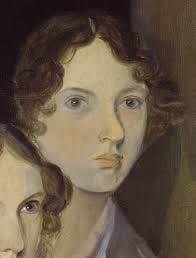
Emily Brontë (1818-48) lived a mere 30 years, her life cut short by illness. She left a collection of poems and one novel, Wuthering Heights, that has become a world classic, beloved of generations of readers and originally published under the name Ellis Bell.
To read alongside...
Literature often explores what it is that makes us who we are, and offers compelling examples that counter Brontë’s causal link between Heathcliff’s brutal childhood and his vicious adult personality. A great example is Emily’s sister Charlotte’s novel Jane Eyre, showing that despite (or because of?) her mistreatment at the hands of her aunt and cousins and the schoolmaster of Lowood, Jane becomes resilient and full of inner strength.
In the realm of life-writing, the genre of the slave narrative shows repeatedly how the violence and abuse of slavery do not warp the authors’ characters but are consciously transformed into the means of protest and activism anchored by a fierce compassion. Frederick Douglass’s account of growing up enslaved in the southern United States in his Narrative of the Life of Frederick Douglass (1845), contemporaneous with Brontë’s novel, lays bare the horrific abuses he endured until his escape to freedom as a young man. In contrast to the fictional Heathcliff, whose abuse at the hands of his adoptive family forms him into a cruel and bitter adult, Douglass’s experiences inculcate a deep hatred of mistreatment of human beings and a drive to harness his suffering to the cause of Abolition. You can read an excerpt from his book in a previous LitHits newsletter here.
Indeed, the link between slave narratives and Brontë’s novel is already implicit in this description of Heathcliff, whose origin story is unknown and who was found starving and homeless in the streets of Liverpool—a city that was a key port in the transatlantic slave trade. ‘Dirty, ragged, black-haired,’ parentless, and speaking a language no one understands, little Heathcliff is quite possibly a child taken from Africa and intended for slavery. Brontë suggests this much but tantalizingly leaves the rest to our imagination.
Suggest a LitHit!
Tell us your own favourites from literature you've read, and we can feature you as a Guest Curator. Just email us with the following information:
Your full name
The title of the book you're suggesting
The location of the excerpt within the book (e.g., "in the middle of chapter 5"), or the excerpt itself copied into the email or attached to it (in Word)
Why you love it, in just a few sentences
About LitHits
You might also enjoy...
Writers Make Worlds: https://writersmakeworlds.com/
The Ten Minute Book Club: https://www.english.ox.ac.uk/ten-minute-book-club
Project Gutenberg: https://www.gutenberg.org/
Standard Ebooks: https://standardebooks.org/
Feedback
We'd love to hear your thoughts on our newsletter:
kshepherdb@yahoo.co.uk
Graphic design by Sara Azmy
All curation content © 2026 LitHits. All rights reserved.